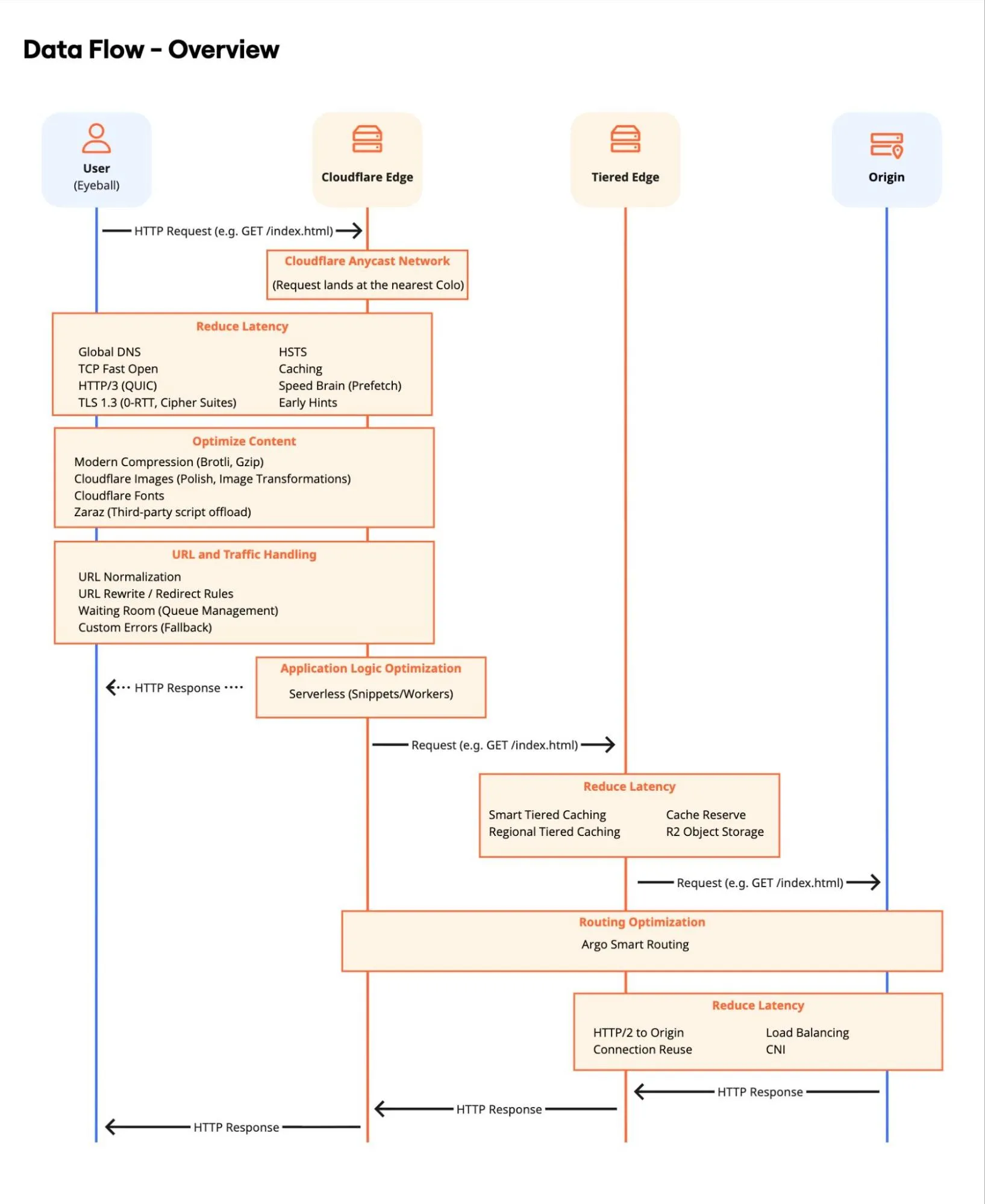
Workers KV là gì? Tủ khóa-giá trị nhanh gần người dùng — khi nào nên dùng What is Workers KV? A fast key-value locker near users — when to use it What is Workers KV? A fast key-value locker near users — when to use it
KV giống tủ khóa nhỏ ở mỗi chi nhánh: đặt một giá trị, lấy lại nhanh — lý tưởng cho flag cấu hình và dữ liệu đọc nhiều, không phải bảng SQL phức tạp. KV is like a small locker at every branch: store a value, read it back fast — ideal for config flags and read-heavy data, not complex SQL tables. KV is like a small locker at every branch: store a value, read it back fast — ideal for config flags and read-heavy data, not complex SQL tables.
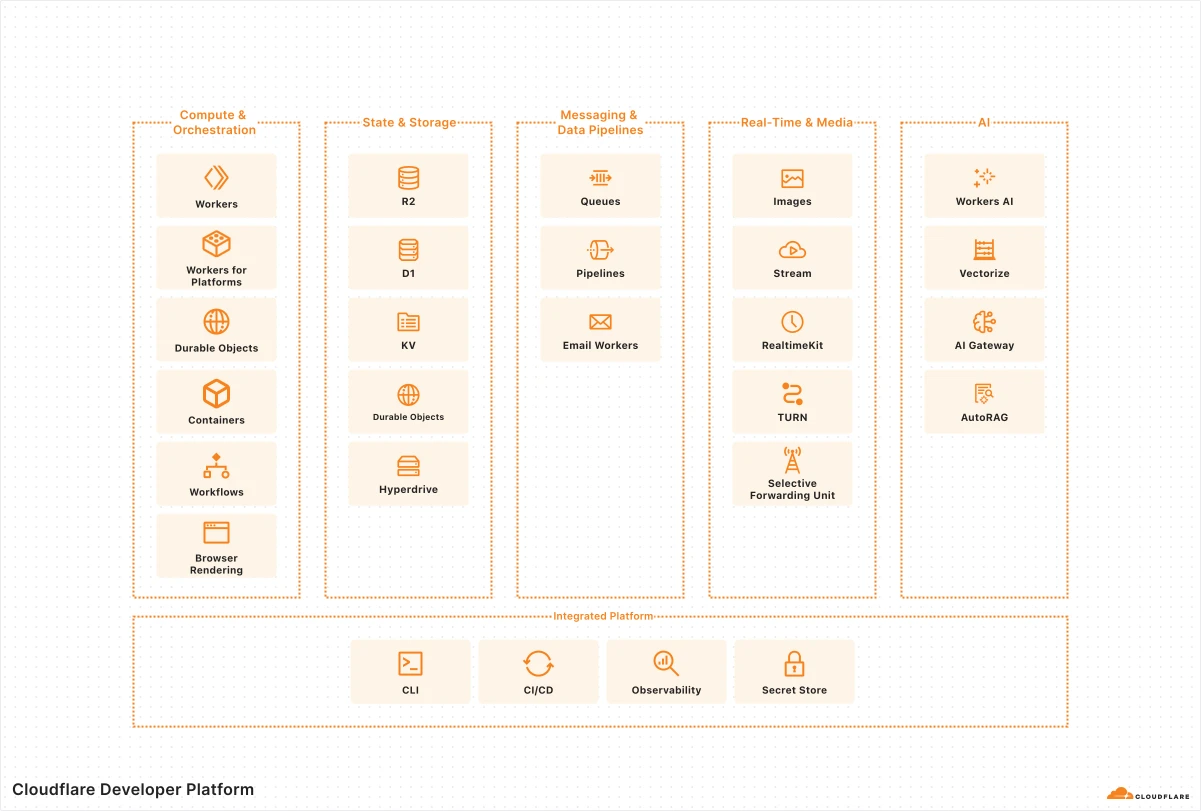
Ứng dụng fullstack Fullstack applications Fullstack applications
Ví dụ fullstack trên Developer Platform — Workers/Pages, storage và AI services trong một kiến trúc thực tế. A practical example of how these services come together in a real fullstack application architecture. A practical example of how these services come together in a real fullstack application architecture.
Thuật ngữ: Concepts: Concepts: Workers · Pages · D1 · R2 · KV · Durable Objects
Sơ đồ chính thức ↗ Official diagram ↗ Official diagram ↗ · Serverless Serverless Serverless
KV giải quyết vấn đề gì mà file JSON trên server không đủ? What problem does KV solve that a JSON file on a server cannot? What problem does KV solve that a JSON file on a server cannot?
Nhiều app cần lưu thứ đơn giản: “bật tính năng mới chưa?”, “banner thông báo là gì?”, “phiên bản cấu hình hiện tại”. Ban đầu bạn có thể nhét vào file config hoặc biến môi trường. Nhưng khi Worker chạy trên hàng trăm điểm edge, mỗi lần đổi banner lại phải deploy lại toàn bộ — hoặc mọi request phải về một server trung tâm để đọc file. Many apps need to store simple things: “is the new feature on?”, “what is the announcement banner?”, “what is the current config version?”. At first you might tuck that into a config file or environment variable. But when a Worker runs across hundreds of edge locations, every banner change means redeploying everything — or every request returns to one central server to read a file. Many apps need to store simple things: “is the new feature on?”, “what is the announcement banner?”, “what is the current config version?”. At first you might tuck that into a config file or environment variable. But when a Worker runs across hundreds of edge locations, every banner change means redeploying everything — or every request returns to one central server to read a file.
Workers KV là kho lưu trữ key-value toàn cầu, được thiết kế cho đọc nhanh và phân tán. Bạn ghi một cặp khóa-giá trị (ví dụ `feature:new-checkout` → `true`), và Worker ở gần người dùng có thể đọc lại mà không cần round-trip về origin. Trên blog.cloudflare.com, các bài về KV và Workers thường nhấn mạnh mô hình “đọc nhiều, ghi ít” — phù hợp cấu hình, cache metadata, hoặc session nhẹ. Workers KV is a globally distributed key-value store built for fast reads. You write a key-value pair (for example `feature:new-checkout` → `true`), and a Worker near the user can read it back without a round trip to origin. Cloudflare Blog posts on KV and Workers often stress a “read-heavy, write-light” model — good for configuration, cache metadata, or light sessions. Workers KV is a globally distributed key-value store built for fast reads. You write a key-value pair (for example `feature:new-checkout` → `true`), and a Worker near the user can read it back without a round trip to origin. Cloudflare Blog posts on KV and Workers often stress a “read-heavy, write-light” model — good for configuration, cache metadata, or light sessions.
Hãy tưởng tượng KV như bảng thông báo ở mỗi chi nhánh cửa hàng: trụ sở cập nhật một lần, các chi nhánh đọc nhanh. Không phải cơ sở dữ liệu để chạy báo cáo phức tạp hay join nhiều bảng — đó là vai trò của D1 hoặc hệ thống SQL bên ngoài. Picture KV as a notice board at every store branch: headquarters updates once, branches read quickly. It is not the database for complex reports or multi-table joins — that is D1’s job or an external SQL system. Picture KV as a notice board at every store branch: headquarters updates once, branches read quickly. It is not the database for complex reports or multi-table joins — that is D1’s job or an external SQL system.
Ứng dụng fullstack Fullstack applications Fullstack applications
Ví dụ fullstack trên Developer Platform — Workers/Pages, storage và AI services trong một kiến trúc thực tế. A practical example of how these services come together in a real fullstack application architecture. A practical example of how these services come together in a real fullstack application architecture.
Thuật ngữ: Concepts: Concepts: Workers · Pages · D1 · R2 · KV · Durable Objects
Sơ đồ chính thức ↗ Official diagram ↗ Official diagram ↗ · Serverless Serverless Serverless
Ba use case thực tế cho người mới trên Developer Platform Three real use cases for beginners on the Developer Platform Three real use cases for beginners on the Developer Platform
Một: feature flags và cấu hình runtime. Bạn bật/tắt A/B test hoặc thông báo bảo trì mà không deploy lại Worker. Hai: session hoặc token nhẹ — ví dụ lưu preference ngôn ngữ, rate-limit counter đơn giản, hoặc cache kết quả API đã xử lý (với TTL hợp lý). Ba: metadata cho nội dung — mapping slug → bài viết, redirect tạm thời, hoặc danh sách IP allowlist nhỏ. One: feature flags and runtime configuration. Turn an A/B test or maintenance banner on/off without redeploying the Worker. Two: light sessions or tokens — for example language preference, a simple rate-limit counter, or cached API results (with sensible TTL). Three: content metadata — slug-to-post mappings, temporary redirects, or a small IP allowlist. One: feature flags and runtime configuration. Turn an A/B test or maintenance banner on/off without redeploying the Worker. Two: light sessions or tokens — for example language preference, a simple rate-limit counter, or cached API results (with sensible TTL). Three: content metadata — slug-to-post mappings, temporary redirects, or a small IP allowlist.
KV gắn vào Worker qua binding — giống cách bạn đã học với R2 hay D1. Code gọi `env.MY_KV.get("key")` thay vì hard-code giá trị. Điều này giữ secret và cấu hình ra khỏi frontend, đồng thời cho phép nhiều Worker dùng chung một namespace KV khi cần. KV attaches to a Worker via a binding — like R2 or D1. Code calls `env.MY_KV.get("key")` instead of hard-coding values. That keeps secrets and config out of the frontend and lets multiple Workers share one KV namespace when needed. KV attaches to a Worker via a binding — like R2 or D1. Code calls `env.MY_KV.get("key")` instead of hard-coding values. That keeps secrets and config out of the frontend and lets multiple Workers share one KV namespace when needed.
Nếu bạn đang theo lộ trình Developer Platform trên hub này, hãy coi KV là “ngăn kéo nhỏ” bên cạnh “tủ lớn” R2 (file) và “bảng tính” D1 (SQL). Mỗi công cụ có chỗ riêng; chọn sai thường dẫn tới chậm, khó query, hoặc chi phí không cần thiết. If you are on the Developer Platform track on this hub, treat KV as a “small drawer” next to R2’s “big cabinet” (files) and D1’s “spreadsheet” (SQL). Each tool has its place; picking wrong often means slow queries, awkward data models, or unnecessary cost. If you are on the Developer Platform track on this hub, treat KV as a “small drawer” next to R2’s “big cabinet” (files) and D1’s “spreadsheet” (SQL). Each tool has its place; picking wrong often means slow queries, awkward data models, or unnecessary cost.
KV vs D1 vs R2: chọn đúng từ đầu tránh đau đầu sau KV vs D1 vs R2: choose right early to avoid pain later KV vs D1 vs R2: choose right early to avoid pain later
D1 là SQLite trên edge — tốt khi bạn cần bảng, quan hệ, và truy vấn SQL (đăng ký workshop, comment, đơn hàng nhỏ). R2 là object storage — tốt cho ảnh, PDF, backup, file lớn. KV là key-value đơn giản — tốt khi bạn biết chính xác khóa cần đọc và không cần JOIN hay aggregate phức tạp. D1 is SQLite at the edge — great when you need tables, relations, and SQL queries (workshop signups, comments, small orders). R2 is object storage — great for images, PDFs, backups, large files. KV is simple key-value — great when you know the exact key to read and do not need JOINs or complex aggregates. D1 is SQLite at the edge — great when you need tables, relations, and SQL queries (workshop signups, comments, small orders). R2 is object storage — great for images, PDFs, backups, large files. KV is simple key-value — great when you know the exact key to read and do not need JOINs or complex aggregates.
Một lỗi phổ biến: nhét toàn bộ “database” vào KV bằng cách serialize JSON khổng lồ dưới một key. Đọc/ghi cả khối mỗi lần, khó cập nhật từng phần, và eventual consistency của KV có thể khiến bạn thấy giá trị cũ vài giây sau khi ghi. Với dữ liệu cần nhất quán ngay lập tức hoặc truy vấn linh hoạt, hãy chuyển sang D1. A common mistake: stuffing a whole “database” into KV as one giant JSON blob under a single key. You read/write the entire blob each time, partial updates are awkward, and KV’s eventual consistency can show stale values for a few seconds after a write. For data that must be immediately consistent or queryable, move to D1. A common mistake: stuffing a whole “database” into KV as one giant JSON blob under a single key. You read/write the entire blob each time, partial updates are awkward, and KV’s eventual consistency can show stale values for a few seconds after a write. For data that must be immediately consistent or queryable, move to D1.
Ngược lại, đừng dùng D1 chỉ để lưu một flag boolean đọc hàng triệu lần mỗi ngày — KV sẽ rẻ và nhanh hơn cho pattern đó. Blog Cloudflare về kiến trúc fullstack thường minh họa KV, D1, R2, và Workers cùng nhau trong một ứng dụng — mỗi thứ một lớp, không thay thế hoàn toàn nhau. Conversely, do not use D1 just to store one boolean flag read millions of times a day — KV is cheaper and faster for that pattern. Cloudflare Blog fullstack architecture posts often show KV, D1, R2, and Workers together in one app — each layer has a role; none fully replaces the others. Conversely, do not use D1 just to store one boolean flag read millions of times a day — KV is cheaper and faster for that pattern. Cloudflare Blog fullstack architecture posts often show KV, D1, R2, and Workers together in one app — each layer has a role; none fully replaces the others.
Bắt đầu an toàn: checklist tuần đầu với KV A safe start: first-week KV checklist A safe start: first-week KV checklist
Một: bắt đầu với một namespace và vài key có tên rõ ràng (`config:banner`, không phải `x1`). Hai: đặt TTL cho dữ liệu tạm (cache API, session ngắn). Ba: không lưu mật khẩu thô hay dữ liệu cực nhạy cảm mà không mã hóa — KV không thay thế vault chuyên dụng. Bốn: test hành vi “đọc sau khi ghi” trong staging; hiểu eventual consistency trước khi production. One: start with one namespace and a few clearly named keys (`config:banner`, not `x1`). Two: set TTL on temporary data (API cache, short sessions). Three: do not store raw passwords or highly sensitive data without encryption — KV is not a dedicated vault. Four: test read-after-write behavior in staging; understand eventual consistency before production. One: start with one namespace and a few clearly named keys (`config:banner`, not `x1`). Two: set TTL on temporary data (API cache, short sessions). Three: do not store raw passwords or highly sensitive data without encryption — KV is not a dedicated vault. Four: test read-after-write behavior in staging; understand eventual consistency before production.
Đọc trang sản phẩm KV và lộ trình Developer Platform trên hub; mở bài gốc trên blog.cloudflare.com khi bạn cần giới hạn kích thước value hoặc chiến lược list keys. Nếu bạn đã đọc bài Workers và D1 trong chuỗi blog này, hãy thử project nhỏ: Worker đọc flag từ KV và đổi response HTML — bạn sẽ “cảm” được edge storage trong vài phút. Read the KV product page and Developer Platform track on this hub; open original posts on blog.cloudflare.com when you need value size limits or list-key strategies. If you have read the Workers and D1 posts in this blog series, try a tiny project: a Worker reads a flag from KV and changes the HTML response — you will feel edge storage in minutes. Read the KV product page and Developer Platform track on this hub; open original posts on blog.cloudflare.com when you need value size limits or list-key strategies. If you have read the Workers and D1 posts in this blog series, try a tiny project: a Worker reads a flag from KV and changes the HTML response — you will feel edge storage in minutes.
Câu hỏi tự kiểm tra: “Nếu hai người ghi cùng key trong 1 giây, tôi chấp nhận kết quả nào?” Nếu câu trả lời là “phải biết chính xác ngay”, KV có thể không phải công cụ đúng cho key đó — cân nhắc D1 hoặc Durable Objects. Self-check: “If two people write the same key within one second, which result must win?” If the answer is “I must know exactly, immediately,” KV may not be the right tool for that key — consider D1 or Durable Objects. Self-check: “If two people write the same key within one second, which result must win?” If the answer is “I must know exactly, immediately,” KV may not be the right tool for that key — consider D1 or Durable Objects.
Hình minh họa Cloudflare Cloudflare visuals Cloudflare visuals
Sơ đồ Reference Architecture chính thức và (khi có) ảnh Dashboard — giúp đối chiếu khi học. Official Reference Architecture diagrams and (when available) Dashboard screenshots — useful while you learn. Official Reference Architecture diagrams and (when available) Dashboard screenshots — useful while you learn.
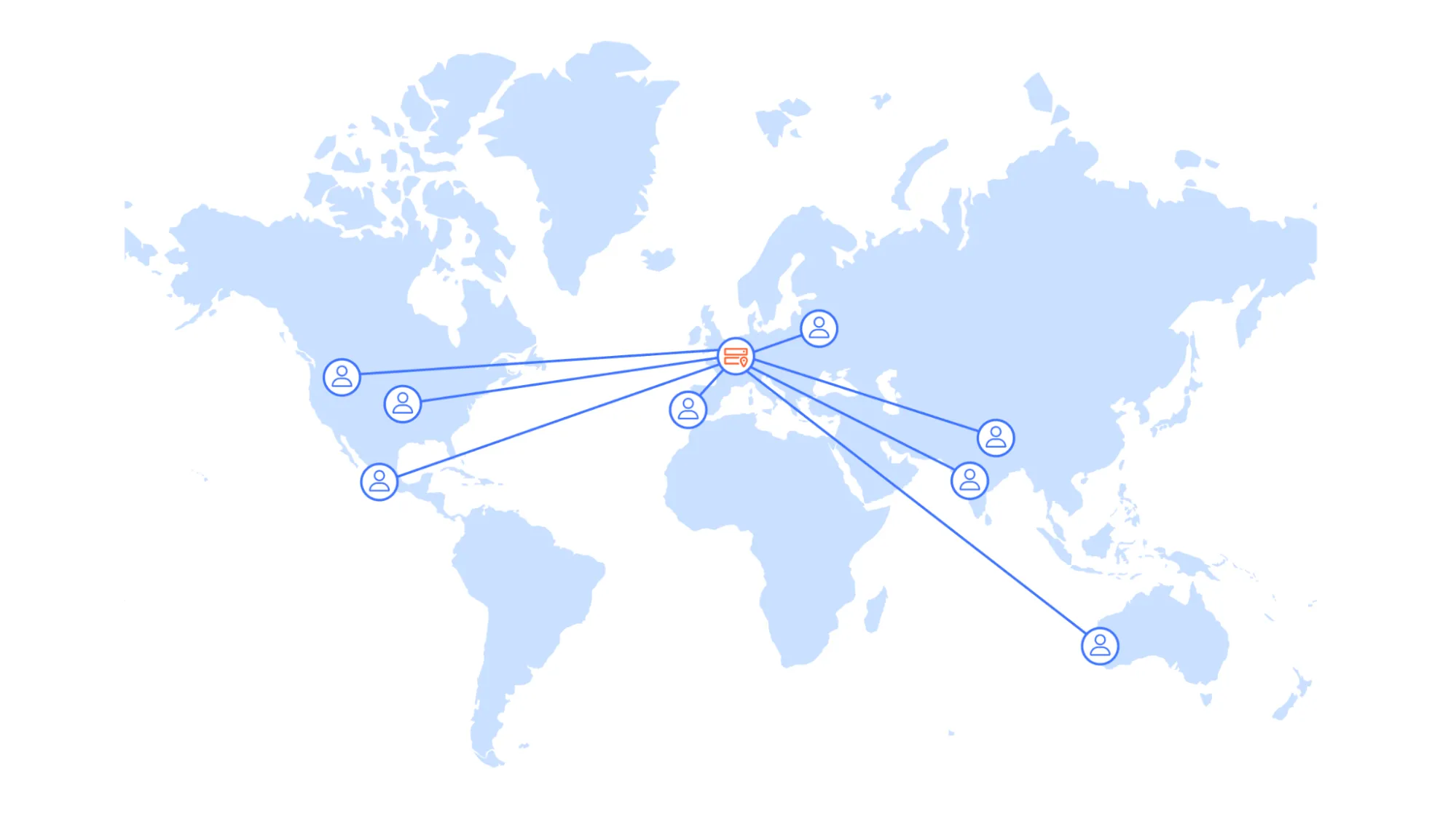
API serverless toàn cầu Serverless global APIs Serverless global APIs
Ví dụ kiến trúc API serverless trên Cloudflare — compute và data product (Workers, D1, R2) tương tác thế nào. An example architecture of a serverless API on Cloudflare and aims to illustrate how different compute and data products could interact with each other. An example architecture of a serverless API on Cloudflare and aims to illustrate how different compute and data products could interact with each other.
Thuật ngữ: Concepts: Concepts: Workers · D1 · R2 · Global API · Edge compute
Sơ đồ chính thức ↗ Official diagram ↗ Official diagram ↗ · Serverless Serverless Serverless
Câu hỏi thường gặp Frequently asked questions Frequently asked questions
KV có thay thế database SQL không? Can KV replace a SQL database? Can KV replace a SQL database?
Không cho hầu hết app có bảng và truy vấn phức tạp. KV phù hợp key-value đơn giản, đọc nhiều. Dùng D1 hoặc database bên ngoài khi cần SQL, quan hệ, và nhất quán mạnh hơn. Not for most apps with tables and complex queries. KV fits simple, read-heavy key-value patterns. Use D1 or an external database when you need SQL, relations, and stronger consistency. Not for most apps with tables and complex queries. KV fits simple, read-heavy key-value patterns. Use D1 or an external database when you need SQL, relations, and stronger consistency.
Ghi KV có hiện lập tức trên mọi edge không? Are KV writes instantly visible on every edge? Are KV writes instantly visible on every edge?
KV theo eventual consistency: sau khi ghi, có thể mất vài giây để mọi nơi thấy giá trị mới. Phù hợp config và cache; không phù hợp số dư tài khoản cần chính xác từng millisecond. KV is eventually consistent: after a write, it can take a few seconds for every location to see the new value. Fine for config and cache; not for account balances that must be exact every millisecond. KV is eventually consistent: after a write, it can take a few seconds for every location to see the new value. Fine for config and cache; not for account balances that must be exact every millisecond.
Nên học KV trước hay D1 trước? Should I learn KV or D1 first? Should I learn KV or D1 first?
Nếu app chỉ cần flag/cấu hình, bắt đầu KV. Nếu cần form đăng ký, bảng dữ liệu, hoặc SQL, học D1 trước. Nhiều project production dùng cả hai. If your app only needs flags/config, start with KV. If you need signups, tabular data, or SQL, learn D1 first. Many production projects use both. If your app only needs flags/config, start with KV. If you need signups, tabular data, or SQL, learn D1 first. Many production projects use both.
Học tiếp trên hub (on-page backlinks) Keep learning on this hub (on-page links) Keep learning on this hub (on-page links)
- KV là gì? (trang sản phẩm) What is KV? (product page) What is KV? (product page)
- Workers là gì? (trang sản phẩm) What are Workers? (product page) What are Workers? (product page)
- Lộ trình Developer Platform Developer Platform track Developer Platform track
- Use case: ứng dụng serverless Use case: build a serverless app Use case: build a serverless app
- So sánh với D1 (SQL edge) Compare with D1 (edge SQL) Compare with D1 (edge SQL)
Nguồn tham khảo (blog.cloudflare.com) Sources (blog.cloudflare.com) Sources (blog.cloudflare.com)
Nội dung được viết lại để dễ hiểu hơn; luôn đọc bài gốc trên blog.cloudflare.com và docs chính thức khi cần chi tiết kỹ thuật hoặc cập nhật mới nhất. Content is rewritten for clarity; always read the original posts on blog.cloudflare.com and official docs for technical detail or the latest updates. Content is rewritten for clarity; always read the original posts on blog.cloudflare.com and official docs for technical detail or the latest updates.